In a soft-spoken and contemplative voice, he told the story of growing up in Mexico city, visiting his father's office at the Bank of Mexico where they had a room with pictures of interesting forgeries. One of the best forgeries was by a French man, who eventually met his father and told him that he had gone into crime because he was a painter, but all the painters in France were decent so it was impossible to make any money.
In a quirky way, Chagoya said that this inspired him, and that he has always been interested in art copies. Much of this over-three-decade career has been dedicated to reproducing classical art with a twist, from adding cartoon characters to drawing indigenous Aztec warriors on top of old portraits.
In his Goya series,"Correspondance in Relation to Goya," Chagoya took Goya's prints and spun them in his own humorous and political contemporary context. In the "Disasters of War" series, there was a painting called "Contra el bien general" which featured a demon character sitting in a chair and reading a book. Chagoya replaced this figure with a the face of Ronald Reagan, to draw attention to the Iran-Contra scandal. In another painting from the "Caprichos" series, Chagoya replaces an illustration of a woman pulling out a tooth from a hanged man. He turns them into Snow White pulling the giant tongue of a Mexican Rat Fink. Chagoya uses images of Disney characters, Mickey Mouse in particular, throughout many of his works to symbolize corporate greed and American materialism.
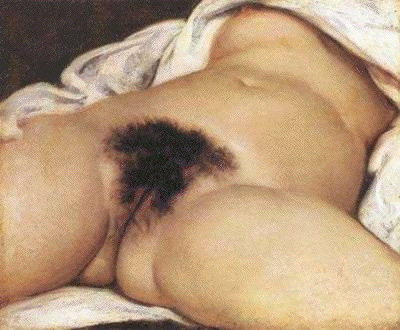
Many of Chagoya's paintings are political, from the more obvious manifestations of Reagan with a Pinnochio nose in "Nose Job" to the use of partial views of the flag and a bloody oil pump on top of a skull in "Holy Order", to more subtle messages such as his reverse anthropology idea. Chagoya maintains the fact that indigenous nations have been bulldozed by the "original illegal aliens," non-native Americans, and their culture compressed. Artists such as Picasso have attempted to bring back many of these indigenous elements by adding things like African masks onto his own cubist style like in "Demoiselles d'Avignon." Chagoya does the opposite: he takes western paintings and alters them into his own indigenous style, by painting characters on top of them. Chagoya takes Courbet's "Origin of the World" (a woman's crotch) and paints the three colors of the Aztec world, in addition to an indigenous character.

Many of Chagoya's works do not mimic other paintings, but still carry the same themes and messages. In the cover of his book "Borderlandia," you see an indigenous figure of a diety, standing robustly in front of a UFO, to draw the connection with illegal aliens and real aliens. He also went through an intense figurative political series in the '80s characterized by dominating Disney characters, Presidential profiles, and blurry chalk smears. Throughout his long career, Chagoya has been recognized by many professional outlets, and has been exhibited in the Metropolitan Museum of Art, The Whitney, The Museum of Modern Art and more. He is currently assistant professor of art at Stanford University.